Showing posts with label Nutrition. Show all posts

Tuesday, April 20, 2010

Yummy Quinoa recipes


Quinoa is one of my favorite foods, and a great substitute for any grain, and actually a lot healthier! Did you know that 1 serving of quinoa packs 14 grams of protein! Not only that, but it has all the complete amino acids and many necessary vitamins and minerals. Here are some of the recipes that I have tried and love:

Easy Quinoa and Summer Vegetable Stir-Fry Recipe
This easy, toss together quinoa is fabulous hot from the pan. But it's also delicious cool, as a quinoa salad.

First make your quinoa, the easy way. In a rice cooker. Here's the quinoa recipe. You'll need roughly 2 1/2 cups cooked quinoa.

As it cooks, gather and cut up your summer vegetables.

You'll need:

Olive oil
1 onion, diced
3-4 cloves garlic, chopped
1 yellow summer squash, sliced
A fistful of slender asparagus or green beans, trimmed, sliced
1 Japanese eggplant (small eggplants are way less bitter), peeled, sliced into bite size pieces
1 bell pepper- red, yellow, orange or green, cored, sliced
2 cups Baby Bella mushrooms, trimmed, sliced
A handful of grape or cherry tomatoes, halved
Sea salt and ground pepper
Herbs, to taste- parsley, basil, thyme, red pepper flakes- whatever you prefer
1 tablespoon balsamic vinegar
Extra virgin olive oil, to taste

When the quinoa is almost done, heat a splash of light olive oil in a wok or large skillet over medium heat. Add the onion, stir until translucent. Add the garlic and cook for a minute. Add the remaining vegetables. Season with sea salt, pepper, and herbs. Add the balsamic vinegar. Stir-fry until tender.

Scoop the cooked quinoa out of the rice cooker and add it into the wok. Stir to combine with the vegetables. Taste test and add more salt or seasoning if it needs it. Remove from heat. Drizzle with extra virgin olive oil and toss to fluff.

Serve immediately; or allow it to cool, then cover and refrigerate it to eat as a salad. before serving it cold, taste test again and adjust seasonings.


Quinoa Salad Recipe with Yellow Grape Tomatoes, Kalamata Olives, Basil and Mint
Summer is the time for picnics and salads that are easy as pie to toss together. Make this tabbouleh inspired quinoa early in the day, before the heat zaps your cooking mojo. It only gets better the longer it chills.

Amounts are approximations, a template to guide you. Salad making is more of an art than science.

You'll need:

1 clove of garlic, peeled
2 1/2 to 3 cups cooked quinoa
A handful of sweet grape tomatoes
1 carrot, grated
4 scallions, sliced (white and light green sections)
1/4 cup Kalamata olives, whole or pitted and chopped
1/3 cup slivered nuts- pecans, almonds or walnuts
Sea salt and pepper, to taste
1 tablespoon chopped fresh basil leaves
1-2 tablespoons chopped fresh mint leaves
Extra Virgin Olive Oil
Juice of 1-2 lemons or limes, depending upon size

Rub the clove of raw garlic inside a glass or ceramic salad bowl.

While the cooked quinoa is still a bit warm (but not steaming hot) scoop it into a bowl and fluff with a fork.

Halve or quarter the yellow tomatoes and add them to the bowl. Add in the grated carrot, sliced scallions, Kalamata olives, and slivered nuts. Toss lightly to combine.

Season with sea salt and ground pepper. Add the chopped fresh herbs. Drizzle the salad with extra virgin olive oil- enough to moisten. Toss to distribute. Squeeze a lemon or a lime all over the salad and toss.

Taste test (this is the fun part). Adjust the seasonings. Does it need more olive oil? Salt? More citrus? Is there a good balance of quinoa and add-ins?

When the seasoning tastes right, cover and chill until serving (at least one hour, but a few is even better).

Before serving, taste again and readjust seasonings if you need to. Chilling summer salads- such as quinoa, rice or potato- dulls certain flavors a bit.


Quinoa Mushroom Pilaf Recipe
You can use either broth or water to cook this quinoa recipe. For a hearty, flavor-rich quinoa pilaf, use your favorite broth.

First:

Make your quinoa the easy way- using a rice cooker. You'll need roughly 2 1/2 - 3 cups cooked quinoa. Here's the organic brand of quinoa I used.

As the quinoa cooks, gather and cut up your vegetables.

You'll need:

Olive oil
2 cloves garlic, finely chopped
1 small to medium yellow bell pepper, diced fine
1 small to medium green bell pepper, diced fine
2 cups sliced mushrooms
Sea salt and ground pepper, to taste
2 tablespoons fresh chopped parsley
1 teaspoon Greek Seasoning (mint, lemon, basil, oregano mix)
2 scallions (spring onions) sliced- white and light green sections
Squeeze of fresh lemon juice
Extra virgin olive oil, to taste

Option:

Toasted pine nuts, for serving

When the quinoa is almost done, heat a splash of olive oil in a large skillet over medium heat. Add the garlic, yellow and green pepper; and stir over medium heat until slightly softened. Add in the mushrooms. Season with sea salt, and ground pepper, to taste. Add the Greek seasoning. Stir and cook until the mushrooms are tender.

Scoop the cooked quinoa out of the rice cooker and add it into the mushroom- pepper mixture. Add in the sliced scallions. Stir to combine. Squeeze fresh lemon juice all over the quinoa and drizzle with extra virgin olive oil. Toss to coat the quinoa.

Taste test and add more salt or seasoning if it needs it.

Sprinkle with toasted pine nuts , if desired.

Serve immediately; or allow it to cool, then cover and refrigerate it to eat as a salad.

Note on chilling this quinoa: Before serving this quinoa cold, taste test again and adjust seasonings; chilling often dulls the flavors in these kinds of salads. I usually allow quinoa salad a few minutes out of the fridge before serving; letting it to come to room temperature helps the flavors. If making ahead as a salad, I'd use water instead of broth- personal preference.

Monday, January 4, 2010

Your Healthiest Year Ever!


I found this article, written by Stephen R. Covey which I liked regarding making and more importantly, sticking to our New Years resolutions. These 12 new developments will keep you feeling fit.

Early indicators are that the coming year will be one of the most challenging in a generation. Even more troubling, many events seem beyond our influence. When you feel control over your life slipping, that's the time to focus on things you can influence. The place to start: ourselves, particularly our health.

The beginning of a new year is one of our most powerful opportunities to start over. After years of setting and failing to keep New Year's resolutions, you may think you have a problem with self-discipline. More likely, it's that you aren't sufficiently clear about what matters most to you. Once you know what is important, it's easy to say no to the unimportant.

This year, resolve to start a new habit connected to your health. To help, USA WEEKEND has gathered 12 of the newest findings in health research -- one for each month of 2009 -- to keep you well, even through tough times. As always, be sure to consult your doctor before you make any changes. And good luck on a happy, healthy new year!

1. Eat right, breathe easy.
Here's a reason to get a handle on your heartburn: A recent study finds chronic heartburn can cause asthma.

About half of asthma sufferers have some degree of gastroesophageal reflux disease, or GERD, characterized by repeated bouts of acid reflux or heartburn. Duke University researchers say that may be because the stomach contents and acidic digestive juices that reflux into the lungs and esophagus injure lung tissue and over time can lead to asthma-causing immune system changes.

To curb GERD: Eat smaller meals; limit trigger foods; and ask your doctor whether you should take medication.

2. Boost your fitness with food.
HDL, the "good" cholesterol, reduces the risk of heart disease and limits the damage of LDL, "the bad cholesterol." It also may help you get fitter. In an Italian study, seniors with high HDL levels had greater lower-body fitness and did better in walking tests than those with low HDL levels.

To boost your HDL: Try exercise, weight control and a diet high in monounsaturated fats, such as olive oil, nuts, avocados and olives. A Finnish study also showed that about two-thirds of a cup of berries daily for two months helped raise HDL and reduce high blood pressure.

3. For energy, move it.
Regular exercise, even if non-strenuous, can help you out of a rut. Both low- and moderate-intensity exercise upped energy levels by 20% in sedentary young adults who, like about 25% of Americans, report persistent but non-chronic fatigue, finds a University of Georgia study. Participants who rode exercise bikes for 20 minutes three times a week for six weeks reported feeling energized, regardless of exertion level. Those who took it easier had a 65% reduction in fatigue, while more moderate exercisers reported a 49% improvement. Either way, exercise acts directly on the central nervous system to increase energy and reduce fatigue, researchers say.

4. Sweat it out ...
... if you are one of the 24% of Americans with metabolic syndrome, a set of physical problems that combine to increase the risk of coronary heart disease, among others. Quick bursts of high-intensity exercise, as opposed to longer, more moderate exercise, can help and even reverse metabolic syndrome, says a recent Norwegian study.

But before you put on your hard-core sprinter's game face, note: The American Heart Association recommends 30 minutes of moderate-intensity exercise most days of the week for metabolic syndrome sufferers. Consult your doctor before changing your workout.

5. Ditch depression with D.
A low level of vitamin D -- the "sunshine vitamin" -- can put a damper on your mood. Depressed people had 14% less vitamin D in their blood than non-depressed people in a Dutch study of 1,282 seniors. So load up on D: While you're improving your mood, you'll be helping your bones, too. Adequate levels of vitamin D also are vital for calcium absorption and bone health.

But don't stop there. You can eat your way to a happier day. Omega-3 fatty acids found in foods such as salmon, walnuts, flaxseed, scallops and cod-liver oil also help fight depression, mood disorders, schizophrenia and dementia, found a study in the medical journal "Nature Reviews Neuroscience."

6. Get soles.
If you have foot pain, it may be time to invest in customized insoles. For the estimated one in four Americans with achy feet, "foot orthoses" are the cure, finds a recent review of 11 trials. Orthoses provided at least short-term relief from foot pain for people with high arches, prominent toe joints, juvenile arthritis and rheumatoid arthritis, the studies found.

7. Go from good to grape.
Turns out, juice sippers can enjoy the health benefits of grapes the same as their wine-drinking counterparts. The fruit, consumed in all its forms, can reduce the risk of heart disease, a new study finds. Grape juice improves blood flow and lowers blood pressure; grape-seed extract helps to lower cholesterol.

8. Go soft on sleep.
Hard beds are often prescribed for back-pain sufferers, but new research finds soft is better. In a Danish study, people with chronic low back pain who slept on water beds or a body-conforming foam mattress reported less pain and nearly an hour more of sleep a night than those who slept on a hard futon mattress for a month.

9. Make like a fish and swim.
Time to take a dip. Low-impact water exercises can ease pain and improve function in people with osteoarthritis of the hip and knee, concludes a medical review. Exercising in water is especially effective for reducing knee pain. In a Brazilian study, osteoarthritis patients reported 22% less knee pain immediately after aquatic exercise than after conventional exercises. Pool therapy, such as strengthening, stretching and aerobic exercises, lightens the body-weight load on joints.

10. Network your way to happiness.
It's no surprise that we are influenced by the moods of those around us. But now, a study shows that people we don't even know can make us happier.

According to a new study, you can be six degrees removed from someone and still catch that person's good karma. In other words, happiness is "viral," and it actually can spread not just from one friend to another, but to friends of friends of friends. That's what researchers at Harvard Medical School and the University of California-San Diego found when they analyzed the social networks of 4,739 people who had filled out a questionnaire about how happy they were.

So if you've resisted joining a social networking website such as Facebook or LinkedIn or trying real-world activities like book clubs or professional networking events, maybe it's time to explore!

11. Pop some pine bark.
Herbal supplements have been called everything from magic pills to poison. Now a study touts the benefits of a pine bark extract called Pycnogenol. Sold over the counter, the supplement helped lower blood glucose levels and blood pressure in type 2 diabetics, University of Arizona researchers say. Nearly 60% of study participants who took 125mg of Pycnogenol every day for 12 weeks were able to cut their blood pressure medication by half. They also had drops of 23.7 points in their fasting blood glucose levels and 12.7 points in LDL cholesterol. In other studies, Pycnogenol -- an antioxidant -- also was shown to reduce osteoarthritis joint pain and stiffness.

12. Look for the salt.
"Consumer Reports" finds sodium stashed in alarming quantities in some surprising sources, ranging from cottage cheese to Caesar salads.

Among the 37 processed foods the magazine's researchers analyzed:

A Premium Caesar Salad with grilled chicken from McDonald's -- without dressing -- had more than double the salt (890mg) of a large order of fries (350mg).

A maple- and brown sugar-flavored instant oatmeal had more than three times as much sodium as the plain kind.

The recommended daily limit for salt is 2,300mg (one teaspoon). Try to avoid processed food and read food labels to steer clear of the worst offenders.

Source: USA Weekend

Monday, December 14, 2009

50 Ways to Cut 500 Calories

If you ate too many chocolate-covered cherries, or indulged in more eggnog that you shoud've, you're not alone. If you fell off your diet wagon over the holidays, don't panic. Jump back on and get rolling again with these great ideas to recover from your indulgences.

The most basic way to lose weight is to slash calories. That’s Diet 101. But how many do you really have to cut or burn to see results? It’s simple: You can drop a pound a week by trimming 500 calories each day. (Calories burned are based on a 150-pound woman.) In fact, do a couple of swaps a day and you can drop 10 pounds in five weeks! So try these 50 easy tweaks—and get the slim body you want in no time.

1. Shake your groove thing. Dance for just two hours and torch 500 calories. (A little air guitar will burn a few extra calories, too.)
2. Get enough sleep. A lack of shut-eye can make you snack, new research from the University of Chicago shows. People who got only 5 1/2 hours of sleep noshed more during the day. Snooze more and save about 1,087 calories.
3. Don’t eat in front of the TV. You’ll eat up to 288 calories more, according to research from the University of Massachusetts. Instead, eat at the table, and trade one hour of TV for a casual walk. Together, that’s 527 calories burned.
4. Get in tune with your tummy. Pay attention to how full you feel, and put down your fork when you’re satisfied. Listen to your body’s cues—instead of looking at whether the plate is clean—and save up to 500 calories a day.
5. Limit dinner guests. Eating with seven or more other guests can make you eat 96 percent more food, says Brian Wansink, Ph.D., author of Mindless Eating. That’s like doubling your dinner! Dine with fewer guests to save 500 or more calories.
6. Simple tricks to fill up (with less!). For breakfast, eat two boiled or poached eggs. (You’ll feel fuller and eat about 416 fewer calories the rest of the day.) Before lunch and dinner, enjoy 1 cup low-cal soup. (You’ll eat about 134 calories less at each meal.) And save a total of 684 calories for the day.
7. Limit salad toppings. A big salad might seem healthy, but all those goodies on top can make it more calorie-laden than lasagna or fettuccine Alfredo. Cheese crumbles, caramelized nuts, bacon, avocado, dried fruit, croutons and vinaigrettes can add lots of calories. Save 500 or more calories by having just one topping, adding flavorful but lower-cal veggies (roasted bell peppers, grilled onions, or mushrooms) and using half the dressing.
8. Don’t clean your plate. Leave 25 percent of your food on the plate at every meal, says weight-loss expert James O. Hill, Ph.D., author of The Step Diet. If you normally eat 2,000 calories or more each day, you’ll cut 500 calories.
9. Use smaller plates. Swap your 12-inch plate for a 10-inch one. You’ll eat 20 to 25 percent less—and save up to 500 calories. You won’t feel any less full, either, researchers say.
Bing Search: Weight Loss View results for: Cut Calories Healthy Eating Workout Routines
10. Serve and sit. Family-style meals, with platters and bowls of food on the table, invite people to go back for seconds and thirds. Cut hundreds of calories by filling plates before bringing them to the table; leave serving dishes in the kitchen, too.
11. Make a swap. Use 1 cup plain fat-free yogurt instead of 1 cup heavy cream in a favorite baking recipe. Save 684 calories.
12. Make mine a mini. Check out menus for small versions of great desserts, so you can dodge calo­ries and end your meal on a sweet note. P.F. Chang’s Great Wall of Chocolate (designed for one diner!) is 1,440 calories. The Mini Great Wall? A chocolatey yet svelte 150 calories. You’ll save 1,290-calories.
13. Ditch that buttered movie popcorn. Yes, the large popcorn at the concession stand weighs in at a whopping 1,005 calories. Smuggle in your own (microwave-popped, 94 percent fat-free, of course) and save more than 700 calories.
14. Count your chips (and crackers). No, you can’t eat your snacks from a large bag or box because it’s waaaay too tempting to eat until the bag is empty. (Remember Oprah’s blue corn–tortilla chip confession?) A chip-bender to the bottom of a 9-ounce bag is 1,260 calories sans the dip. So stick to one serving, about 15 chips—that’s 140 calories—or pick up some 100-calorie snack packs and save 1,120 calories.
15. Step away from the nuts, especially if they’re in a big bowl. The bigger the serving bowl, the more you’ll eat, Cornell University researchers say. Nuts have heart-healthy fats, but they’re also high in calories: One handful (about 1 ounce) of oil-roasted mixed nuts has 175 calories; three handfuls have 525. Cut out nuts altogether and save more than 500 calories. Can’t resist ’em? Eat pistachios: Two handfuls are just 159 calories, and the shelling will slow down your munching.
16. Skip the whip—or at least size it down. Dessert-like coffee creations can contain as many as 670 calories, with large sizes and options like whipped cream, whole milk and syrups. Craving whipped cream? Try it on a shot of espresso for a total of just 30 calories. You save 640 calories!
17. Kick the soda habit. A 12-ounce soft drink has about 150 to 180 calories. If you down two or three a day, you’re getting lots of extra calories. Quench your thirst with water and save as many as 540 calories.
18. Drink sugar-free. A 20-ounce tea with added fruit juices can have 400-plus calories. And Southern-style sweet tea isn’t much better than soda: a 16-ounce bottle of syrupy sweet tea has 180 calories; three of those are 540 calories. Choose sugar-free sips and save more than 400 calories.
19. Skinny up cocktails. Syrups, sour mix, sugary fruit juices and creamy additions turn drinks into desserts: an indulgent Mudslide can have more than 800 calories. Order drinks mixed with club soda, tonic water, cranberry juice or a squeeze of citrus; or try distilled liquors on the rocks. You’ll save up to 800 calories.
20. Eat less pasta. One cup of pasta is just 220 calories. But typical dinner portions at restaurants can be as much as 480 percent larger than that 1 cup, according to New York University research. That’s 1,056 calories. Even if you eat 2 whole cups of noodles, you’ll still save 616 calories.
21. Get out your knitting needles. An afternoon of knitting can burn more than 500 calories (at a rate of about 100 an hour).
22. Clean house. Tidy up for 2 1/2 hours and burn 510 calories.
23. Check the number of servings in a dish. The calorie count on the menu for shrimp fried rice may say 350 calories per serving, but what’s set in front of you may actually contain four servings. Split it with three friends, and save 1,050 calories.
24. Beware the healthy-food trap. People let their guard down when the menu is full of healthy fare, underestimating calories by as much as 35 perecnt, research by the Cornell University Food and Brand Lab shows. You’re also more likely to order drinks, sides and desserts with up to 131 percent more calories when you have a healthy entrée. Skip caloric sides—a cookie, chips—to save 500-plus calories.
25. Build a lean burrito—and you’ll save 630 calories. Here's how:
Instead of a flour tortilla, order lettuce.
Instead of cheese, order guacamole.
Instead of ground beef, shredded pork.
Instead of black beans, order pinto beans.
Instead of rice, order corn salsa
Instead of salsa, order pico de gallo
The reduced calorie options add up to 490 calories—down from 1,120.
26. Think small at the ice cream shop. Even if you indulge in your favorite full-fat flavor, you’ll save as many as 550 calories with a 5-ounce size instead of a 12-ounce.
27. Think thin when it comes to pizza. Eat two slices of a medium thin-crust veggie pizza (360 calories) instead of two slices of a large, meaty deep-dish pizza (940 calories) and save 580 calories.
28. Beware hidden oils. Ask to have your food cooked with a little stock instead of oil, or order steamed or poached entrées: you’ll save 124 calories per tablespoon of oil. Also, have the kitchen skip oils added at the last minute like basil oil or chive oil, and save another 40 calories per teaspoon.
29. Order spaghetti with meat sauce instead of spaghetti with Italian sausage and save 560 calories. Even better: Order mushroom ravioli (670 calories) or pasta marinara (430 calories).
Bing Search: Weight Loss View results for: Cut Calories Healthy Eating Workout Routines
30. Nix that smoothie a day. A large 32-ounce smoothie can have 800 or more calories. That really adds up if you’re having on-the-go breakfast several times a week. Instead, try a filling lower-calorie starter of oatmeal with brown sugar and banana slices, and a cup of black coffee. You’ll save 518 calories.
31. Help a friend move. You’ll burn more than 600 calories in one hour of carrying boxes and furniture up and down the stairs.
32. Shovel snow. Clearing the driveway and sidewalks for one hour and 15 minutes will torch 510 calories.
33. Ice-skate for one hour and five minutes and burn 516 calories. (Or go inline skating and slash 562.)
34. Tap your foot. Your skinnier friends are probably fidgeters, who burn up to 350 calories a day just by tapping their feet or being restless. Try it for a few days. Walk around while you’re on the phone, or tap out a tune with your hands or feet (in the privacy of your own office, of course).
35. Be the hostess with the mostest. Go grocery shopping for one hour, put away your groceries, spend two hours cooking a fabulous holiday feast, set the table and serve. Then toast yourself for the awesome 640 calorie-burn. (A glass of champagne is only about 106 calories, so you’re still ahead.)
36. Go window-shopping. Whether you buy anything or not, an afternoon of walking around and trying on clothes can torch 548 calories.
37. Hit the pool. Do one hour of laps or 55 minutes of jogging in the water to burn 500 calories.
38. Stroll your way slim. Spend an afternoon pushing junior from the giraffes to the sea lions at the zoo (or around the aquarium or museum) and burn 523 calories.
39. Head to a county fair or amusement park. You’ll slash 612 calories in three hours from the casual walking and standing in lines. (Subtract 105 calories if you have cotton candy.)
40. Play a game of touch football or basketball with your kids for one hour and burn 500 calories.
41. Head for the nearest hill. Go sledding with the kiddos for one hour and five minutes. You’ll burn 500-plus calories.
42. Do an hour of circuit training and you’ll burn 544 calories.
43. Tackle the garage. Clearing out junk for 1 hour and 30 minutes will burn 510 calories.
44. Rake the leaves. Do yard work for 1 hour and 45 minutes and burn 512 calories. (Jumping in the leaf pile won’t hurt, either.)
45. Kickbox. Sign up for kickboxing and burn 510 calories in a 45-minute class.
46. Go cross-country skiing for one hour and five minutes and sizzle off 516 calories.
47. Exercise at home. Pop in a one-hour aerobics DVD, and finish with 20 minutes of yoga—500 calories, gone.
48. Walk or run a 10K and you’ll burn up to 680 calories.
49. Go hiking. Just one hour and 15 minutes will burn 510 calories.
50. Cut down your own Christmas tree. Hike out, find the perfect tree, cut it, and take it home. Put it up and decorate it for 1 hour to burn 519 calories.

-Source: MSN Health

Tuesday, December 1, 2009

The 5 Rules of Flat Abs


Most of us don't stress about a bit of belly fat hanging over our waistbands during the winter—after all, damage control is just a body-shaping undergarment away, right? But what if you're headed to a place where not even Spanx can save you: the beach or the pool?

The frustrating reality is that the midsection is one of the trickiest areas to tone. That's why even women dedicated to regular exercise often can't iron out their abs. Fortunately, I've come up with some tips and tricks for the ultimate tummy—flattening plan. Not only is it super effective, but it's likely loads easier than the agonizing ab workouts you've been putting yourself through (that are probably getting you no results!).


RULE #1: Attack your hidden core muscles.

Crunches target only superficial muscles, so they aren't the most efficient way to work your abs. Fact: To burn one pound of fat, you have to do 250,000 crunches. That's 100 crunches a day for seven years. Uh, no thanks. Instead, you should target the muscles that lie beneath the superficial ones: your transverse abdominis, multifidis, and internal obliques. Strengthening them pulls in your middle like a corset, keeping the area looking flat and toned. Core moves like planks or mountain climbers (see below) target these "hidden" muscles. To practice engaging them, try this drill: Lie on your back and place your palms just below your navel. Exhale and allow your tummy to expand as far as you can, then focus on pulling your belly button toward your spine, drawing your abdomen toward the floor. Hold for 5 seconds. Repeat 8 to 10 times.


RULE #2: Move your butt.

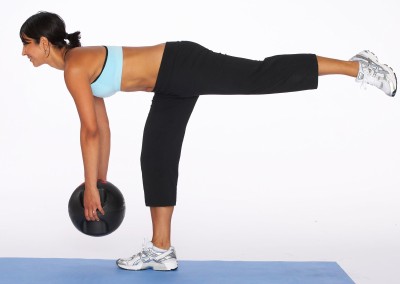
Your booty and your belly are unlikely partners in crime. Here's why: Over time, sitting around too much renders your glutes practically useless and causes your hip flexors—the muscles that connect your hipbones to your legs—to become stiff. This couch-potato combo tilts your pelvis forward, which increases the arch in your back and puts stress on your spine. From a cosmetic standpoint, it pushes your abdomen out, making even a relatively flat stomach bulge. That means that to lose your gut, you've got to work your butt. Exercises like the single-leg deadlift and hip-glute raise (see below) will help you get a stronger behind. Combat tight hip flexors with this stretch: In a lunge position, lower yourself so your back knee is resting on the floor. Push your hips forward, keeping your back upright, until you feel a stretch in the front of the hip. Hold for 10 seconds, relax, and repeat. Switch legs. You can increase the stretch by reaching your arms over your head.


RULE #3: Eat flat-belly foods.

You can't see ab muscles if they're buried under a layer of fat. Excavate them by following these easy dietary guidelines.

*Pump up your protein intake. Substituting meat, fish, dairy, and nuts for carbs can reduce the amount of fat around your middle. Researchers have discovered that when people exchange carbohydrates in favor of an equal amount of protein, they reduced overall belly fat.

*Eliminate added sugar. The average American eats about 20 teaspoons of sugar daily in the form of processed foods like soda, baked goods, breakfast cereals, fruit drinks, and even flavored yogurt. That's about 325 empty calories every day. All that sugar increases insulin production, which slows your metabolism.

*Don't fear fat. Research shows that diets containing more than 50 percent fat are just as effective for weight loss as those that are low in fat. Fat is filling and adds flavor to your meals—both of which help you avoid feeling deprived, so you can stick to your diet. Eat foods rich in monounsaturated fats, such as olives, nuts, and avocados; research has even found that it's OK to enjoy whole foods that contain saturated fat (including milk, cheese, and butter) in moderation.

*Beat the bloat. No matter how much ab fat you lose or muscle you tone, if you're bloated, you won't look (or feel!) your best in a swimsuit. Carbonated beverages, and even good-for-you foods such as beans and broccoli, can make your stomach swell. And keep your sodium intake in check: Nutritionists suggest you stay under 2,000 milligrams to avoid retaining excess water. (Most of us get closer to 5,000 a day.)

RULE #4: Stop stressing.

Your kids. Your in-laws. Your never-ending to-do list. I get it—life is hard. But anxiety can produce extra cortisol, a hormone that encourages the body to store fat, particularly in your belly. According to researchers, your midsection is four times as likely as the rest of your body to store stress-induced fat. Help keep anxiety in check by taking little breaks from work every 90 minutes. Another way stress sabotages your abs: When tension runs high, we reach for fattening foods. To keep your hand out of the office candy jar, keep it out of reach. In one study, participants who had to walk six feet to reach the candy ate up to seven fewer chocolates per day than when the jar was conveniently located at their desk.

RULE #5: Work your abs less often.

Ditch your daily ab workouts. You need only three sessions a week to see maximum results. Training every day with endless crunches won't flatten your belly faster. You'll see benefits quicker if you give your muscles a day to fully recover between workouts. That's because stressing your muscles during a workout breaks down the tissues, and they need rest days to rebuild and get stronger. What's more, you should stick to only 15 to 20 reps of each move. If you can easily do that many, it's time to for harder moves. And if flat abs are important to you, promote them to the top of your fitness to-do list. A lot of people exercise their abdominal muscles at the end of their workout, and that's when you get sloppy or run out of time. You should do them first, and then move on to your cardio. To get them looking great, you need to make them a priority. You'll be glad you did.

Sunday, October 11, 2009

7 Secrets to Highly Successful Weight Loss


Your weight-loss strategy should be similarly inspired. Find someone who inspires you and find out what they do to look so good. Or follow the tips below. Willpower alone won't shrink your waist—you need facts on your side if you're going to maintain the resolve you showed last January. Luckily, there are scientists who study weight loss and regularly come up with good advice, the latest and greatest of which I've gathered for you here. Your new body starts now. Bonus tip: It’s never too late to get back in shape.

Weigh yourself. Often experts used to suggest staying off the scale—it can be discouraging. But after studying 3,500 individuals from the National Weight Control Registry (NWCR) who've maintained 60 or more pounds of weight loss for at least a year, researchers found that 44 percent weighed themselves daily. "They use it as an early warning system for preventing weight regain," says James Hill, Ph.D., NWCR cofounder and director of the Center for Human Nutrition at the University of Colorado.

Beware of tastebud betrayal. "Hunger increases taste sensitivity to sweet and salty substances," says researcher Yuriy Zverev, of the University of Malawi. This means vending-machine snacks (which come in two flavors: sweet or salty—coincidence?) will taste even better when you're hungry. You could trust that you'd savor the flavor by eating only a small amount. (Right.) Or you could sidestep this land mine altogether. "Eat offensively," says Katherine Tallmadge, M.A., R.D., a spokeswoman for the American Dietetic Association. "Eat regularly during the day to stave off cravings and the bingeing that can result." Bonus tip: You don’t have to abandon all of your indulges to lose weight and keep it off.

Turn off the TV. Scientists at Brookhaven National Laboratory in New York recently determined that simply seeing food can trigger a physiological "feed me" response. In the study, visual food cues caused brain activity to jump by 24 percent—mostly in the orbitofrontal cortex, the area of the brain related to drive and acquisition. So a constant barrage of pizza-delivery ads on TV could test your limits. And don't get me started on the Food Network.

Snack on almonds.
Seventy per day, to be exact. That's the number that people in a City of Hope National Medical Center experiment ate daily for six months, in conjunction with a reduced-calorie diet, to drop 18 percent of their body weight. Study author Michelle Wien partially credits the satiety factor. "Almonds are a nutrient-dense food that provides healthful monounsaturated fat, protein and fiber, which together contribute to feeling full," she says. Go for whole almonds in their unsalted, raw or dry-roasted state. Fifteen to 20 will do the trick for a quick snack. Try 50 as a meal replacement.

Go under the needle. When Polish researchers examined acupuncture as a diet aid, they found that people who got needled lost 10 more pounds and ticked 2 additional points off their BMIs compared with those who merely cut calories. Marie Cargill, a licensed acupuncturist in the Boston area, explains that pressure points on the body—mostly on the ear—work as a switchboard to the brain, triggering electrical pulses that suppress appetite. "The ear system is very effective for addiction treatment," she says.

Pour a bowl of cereal for lunch. A study from Purdue University shows that eating cereal in place of meals helps you lose weight. Participants consumed an average of 640 fewer total daily calories and lost roughly 4 pounds during the two-week intervention. According to study author Richard Mattes, M.P.H., Ph.D., R.D., the approach teaches portion control with a convenient, easy-to-use food. Important though-stick to filling, high-fiber cereals, like All-Bran or Fiber One, and eat them with low-fat milk.

Eat a cow's worth. Of dairy, that is. Reports of the benefits just keep coming. Recently, a University of Tennessee study found that people who ate a daily 1,200 milligrams (mg) of calcium from dairy lost an average of 24 pounds, or 11 percent of their total body weight. "When you don't have enough calcium in your diet, you're more efficient at making fat and less efficient at breaking down fat, causing a bigger, fatter fat cell," says lead researcher Michael Zemel, Ph.D. Get the just-right amount by taking in two 8-ounce glasses of low-fat milk (699 mg), a cup of low-fat yogurt (338 mg) and an ounce and a half of cheese (287 mg).

Gamble on yourself. Take a cue from the poker craze and wager against a friend to see who can shed the most pounds. "Men especially do really well when they make weight loss a competitive game," says New York City nutritionist Joy Bauer, M.S., R.D., author of Cooking with Joy. "Have a six-month and a one-year check-in—none of that two-week garbage."

Source: MSN "7 Secrets to Highly Successful Weight Loss" (Sept 30, 2009)

Sunday, August 16, 2009

How to Resist Temptation


In a world where you can inhale half of your daily caloric intake as you exit the drive-thru, often the only thing standing between you and a few extra chins is willpower-that oh-so-elusive ability to stop the urge to indulge. If your powers of resistance are lacking, you'll be glad to hear that research actually shows that willpower is a kind of mental muscle, and like any muscle, it can get stronger. These four tactics target the most common resolve busters. Put them into practice, and pretty soon that jelly glazed doughnut or that triple fudge brownie will be no match for your mental strength.

Rule #1: Eat smaller, more frequent meals
What it targets: Out-of-control hunger
Why it works: Going too long without eating makes your blood sugar levels plummet. That leaves you feeling ravenous and with an appetite that can overpower any sense of logic or best intentions to eat well. If you have small meals every 3 hours, your blood sugar remains stable, preventing the wallop of a sugar low that will leave you vulnerable to overeating. Did you know that that your blood sugar levels do more than affect how hungry you get? They're also directly connected to willpower. So, reach for snacks in between meals that balance carbohydrates with protein like low-fat yogurt and berries or an apple and a handful of almonds. When you do this, you will keep blood sugars at bay and stay fuller longer.

Rule #2: Eat with your other hand
What it targets: Distraction or eating too quickly
Why it works: Picking up a fork with the hand you don't usually use while eating slows you down and makes you focus on your meal and eat at a slower pace, two things that have been proven to aid weight loss. Studies have shown that that with regular practice, this kind of switcheroo can also increase your overall willpower. Also, by eating slower, your brain is able to tell your stomach when you're satisfied and you'll end up eating less.

Rule #3: Weigh yourself regularly
What it targets: Losing sight of your goal
Why it works: Few things keep your weight loss goal front and center better than seeing those big glowing numbers on the scale. Regular weigh-ins also make it easier to notice extra pounds creeping on, so you can slash and burn immediately. Researchers have found in studies that those that weighed themselves frequently, daily or weekly, lost more weight than those that didn't. Actually, about DOUBLE the amount of weight of those that didn't step on the scale often. But keep in mind, that your weight is going to fluctuate to some degree. Your clothing, the time of day, and how much water you're retaining all affect your weight, so don't be discouraged if that number goes up a few pounds suddenly. Also, break your goal weight into several smaller targets-first aim for five pounds, then after you hit that, go for another five. Studies have shown that the more frequent and specific your weight loss objectives, the better your chances to sticking to them.

Rule #4: Lift your spirits
What it targets: Emotional eating
Why it works: It's estimated that when people overeat, nearly 75% of the time it's because they're feeling blue. It stands to reason that lifting your spirits might also help you take your mind off munching. Studies have shown that small doses of pleasant emotions can quickly renew your ability to say no. So, go do something you enjoy, go for a walk outside, talk on the phone, read...just find something to do that you enjoy and makes you happy-it might be temporary, but it will help sustain your urge to splurge.

Source: Women's Health

Wednesday, May 13, 2009

7 Secrets to Being Naturally Thin-Really!

"I look fat."
"I hate my body."
"I'm not going to that party. I'll just eat way too much."
"I would be happy if I could just get skinny."

Sound familiar??? These aren't the words or thoughts of a naturally thin person, but they might be the things you say or think to yourself. You can stop thinking this way and break free from the oppression of food obsession and become "naturally thin". Here are the secrets and practices of naturally thin people that I've learned about eating and cooking into simple rules.

RULE #1: Your diet is your bank account. This should be in the forefront of your mind at the start of each day. Just as you balance your spending and savings, you must balance your food choices. Don't eat too much of any one thing, balance starches with proteins, vegetables and fruits with sweets, and always balance a splurge with a save. This balance is approximate-but it works, without counting, meausuring, or obsessing.

Most of the time, make smart investments in healthful foods that fill you up. Then, when you really want to splurge, go ahead. You aren't dieting, remember. You are living! However, a splurge comes with a price. You have to balance that splurge by cutting back a little afterward, until your accounts are in order again. For example, let's say you have pancakes for breakfast. They're yummy-and starchy and sweet. So what do you have for lunch? Pasta? Of course not. That's more starch. You now need protein and vegetables. So have a salad with grilled chicken or some vegetable soup. Just stay tuned in to what you are doing, and you'll be able to have the foods you really love-in a balanced way.

RULE #2: Cancel your membership in the clean-plate club. This rule isn't about wasting food. On the contrary, it will help you get more for your money by increasing the fun and frugal factor, making one meal into several meals, and by putting less food in your body. Try these strategies.

*Share it. This helps you eat less while allowing you to taste more.
*Save it. Take home in a doggie bag (even ask the server to pack up half the entree in a doggie bag before you see it!) and you'll have something to look forward for lunch the next day! Plus, it's economical, figure-friendly, and gives you one less meal to plan the next day.
*Leave it. It might be hard to do, so start by simply leaving one or two bites of something, then gradually increase the amount you leave.

RULE #3: Get real. In other words, eat real food and limit processed. Choose food that's as close to its natural state as possible. An apple is better than pasteurized apple juice, but apple juice is better than an apple-flavored drink that doesn't contain any apples. It may sound trite, but you are what you eat, so keep it real! Even buy organic, seasonal, or local produce. In most cases, fresh food tastes better.

Another important reason why eating real food can make you naturally thin is it's usually high-volume food. Raw vegetables, in particular, are high in fiber and volume so when you eat them first you end up with less room in your stomach for other, higher-calorie foods. Start your meal with a big salad or a bowl of vegetable soup, and you won't have as much room left for food with more fat and calories. Sure, you can still have your favorite junk food, but if it becomes an "I know what this is going to do to me, so I'll have 2 bites" kind of thing, then you'll be eating like a thin person.

RULE #4: Taste everything, eat nothing. This doesn't mean you can't EAT anything. You will eat plenty of full portions of things, but you don't always need to do it. Tasting little bits of the very best foods offers enough that satisfies those cravings, but without so many harmful calories. So, how do you pull off little tastes?

For example, when you know you're going to a party, holiday dinner, event, etc that will offer opportunities for overeating, the worst thing you can do is to starve yourself all day because you think it will allow you to eat more. Do just the opposite: eat a simple, sensible breakfast; have a healthy, light lunch; and right before the party have a healthy snack. The calories you save by having a healthful snack before you are faced with temptation will more than make up for the calories you spend.

RULE #5: Pay attention. When you barrel through the food on your plate as if you're in a race, do you really taste what you're eating? Did your body even register that it had a meal? Eating consciously makes food worth its calories. It also helps you become choosier about what you eat. Here are some tips for learning how to do it.

*Taste your food. It takes two seconds to shift your attention to what you are doing and actually taste what you're eating. Then, the food will register as an experience.
*Quit multi-tasking while eating. Don't eat while doing something else, like watching TV. This might be impossible all the time, but it's a good goal.
*Always sit down to eat. When you eat standing up, you won't feel satisfied because you're not really thinking about eating. Those bites while you're cooking really add up. If you don't eat until you're ready to make yourself a plate and sit down, you'll save hundreds of unnecessary calories.
*Make food special. In a restaurant, you pay to have your food made special. So why shouldn't you do it at home? To make a salad, don't just grab some iceberg lettuce out a bag. Choose fresh, crisp greens, put some bright colored veggies on it, and top it with almonds or crumbles of feta cheese. If your food is really worth it, you'll be more likely to pay attention.

RULE #6: Downsize now. If your portion is small, you can eat absolutely anything that really sounds good to you. These simple tricks will take the guess work out or even having to break out the measuring cups and spoons.

*Small plates. If you put a little food on a big plate, you're going to feel cheated. Try using a salad plate instead of a full-size dinner plate for your meals and snacks at home. Keep those plates in the front of your cabinet, and grab them first.
*Ramekins. Never eat anything out of the bag; use a ramekin for decadent treats like ice cream or chips.
*Mini-muffin tin. Instead of baking big cakes and loaves, bake mini cupcakes and muffins-automatic portion control.
*Chopsticks. Although you can certainly use regular utensils, chopsticks are fun and can help you slow down.
*Small juice glasses and dessert wineglasses. Save the big tumblers and pint glasses for water. For everthing else, use smaller glasses.

RULE #7: Know thyself. There isn't one certain method of eating that works for everyone. (Like eating every 2-3 hrs.) You're the one in control-not the food, and not any kind of diet. Get to know yourself and what works for you!!!

Source: Health Magazine

Sunday, May 3, 2009

25 Fast, New Fat-Burners!

First of all, I have to apologize for my lack of posts lately. It's been a very busy month for me with my preparing for my bootcamp class amoungst many other things. Unfortantely, it's not going to slow down these next few months, but I promise to make more of an effort to update this blog more regulary. Remember, if you have any ideas or questions that could possibly go on this blog, please send them to me!!!

Here's 25 small tricks to crank your calorie-blasting way up!!!

1. Linger in the dairy aisle. Women burn more fat and calories when they ate 1,000 to 1,400 milligrams of calcium per day. That's three to four servings of dairy.


2. Break a sweat in bursts. If you can't get an hour/day of exercise, try doing two 30-min workouts. Some studies have even shown that this method can actually burn more fat than exercising 60 continuous mintues. And it helps for those with tight schedules, kids, and whatever else keeps you from fitting in exercise.

3. Eat more meat...and eggs and beans. In a recent study, people who got 40% of their daily calories from protein lost significantly more body fat than those whose diets had only 15 % protein, even though they consumed the same number of calories.


4. Start hard, finish easy. Studies have shown that cyclists who ramped up the intensity during the first half of their workout and slowed down during the second half torched about 23% more fat than those who moved from low to high intensity. Same goes with any other kind of exercise.

5. Start with whole grain. People who down whole-grain cereal first thing in the morning burn more fat during the day and during exercise than those who eat more-quickly-digested fare, like a bagel.


6. Don't hang on for dear life. If you cling to the handrails of your stepper or elliptical, you put less stress on your larger, more powerful lower body muscles-and burn fewer calories. If needed, grip loosely for balance only.

7. Walk with Nordic poles. You'll increase your calorie-burn by 20%-plus, it'll feel less taxing.


8. Interval train. Studies have shown that women who did 20 minutes of intervals on a bike torched three times as much fat as those who stayed at one pace for 40 minutes.

9. Crank it up. Vigorous aerobic exercise for 40 minutes makes your body burn calories at a higher rate for nearly a full day afterward.

10. Pump iron. Resistance training increases your resting metabolic rate by about 7%, so you'll burn more calories throughout the day, even while sitting on your butt.


11. Two words: circuit train. My personal favorite and tried-and-true method for losing body fat. Instead of resting for 60 sec between weight-lifting sets, move straight from one exercise to another to keep your heart rate up and maximize calorie burn. Even better, combine multiple muscles into one exercise thereby maximizing time as well (I call this power circuit training).

12. Drink green tea. Testers who downed a green tea supplement boosted their metabolism by 4%, compared with those consuming a caffeine supplement or placebo.


13. Use more olive oil. People who ate a diet high in monounsaturated fats burned mroe fat over 4 weeks than they did on a diet high in saturated fats, one study found.

14. Strength train last. You'll obliterate more calories if you lift weights after cardio (not before).

15. Go for yogurt. People who included yogurt in their diet plan ditched 22% more weight and 61% more body fat than those who simply trimmed calories. My personal fave-yogurt parfait. Layer low or non-fat PLAIN yogurt with mixed berries (I buy the frozen kind) and granola in a tall glass (and then add another layer). Scrumptous, filling, and a great meal and way to ante up the calcium, not to mention the vitamins and mineral from the fruit too (without all the sugar).


16. Bring your I-Pod. Exercisers who listened to music lost more weight and body fat-and worked out more consistently-than those who didn't.


17. ...and adjust your playlist. Throw some fast-faced songs into your musci mix. You'll work out harder and faster, burning more calories and fat. Plus, it'll feel easier!

18. Wolf some protein. A calorie is a calorie, but your body burns about 25-30% of them while digesting 100 calories of protein versus only 7 of them while digesting 100 calories of simple carbs.

19. Think uphill. Forget flat treadmill walking, crank up the incline and you'll jack up the calories burned.


20. Fidget. Sounds silly, but people who jiggle their legs, talk with their hands, and incorporate small movements into their day can burn as much as 350 extra calories daily.

21. Stand when you take a call. It'll burn about 20% more calories than sitting.

22. Believe it. Take note of all your daily activities-taking the stairs, walking, holding kids, carrying groceries, etc and you're bound to do them more.


23. Add fish oil-and move. A recent study showed that people who took 6 grams of fish oil every day and exercised three times a week lost more fat than those who just took fish oil, or took sunflower oil.

24. Use your arms and legs. A workout that requires coordinating arm and leg movements, such as swimming or step aerobics, feels easier than one that uses only one major muscle group. That makes it more likely you'll do it again tomorrow-keeping the fat burning going.


25. Opt for a Wii. Playing active games on the Nintendo Wii (such as tennis and boxing) knocked out more calories than using the Xbox 360. Even better? Wii FIT.


Source: health.com

Thursday, March 19, 2009

15 "SUPER" foods for Weight Loss

Everyone wants to know the right foods to lose weight. Of course, it is a numbers game-calories in vs. calories out is MOST important when weight loss is your goal, but let's not forget QUALITY is also very important. WHAT you eat can determine a number of factors, but the right foods help you drop pounds by revving your calorie burn and curbing cravings.


1. Wild salmon. Not only do fish fats keep your heart healthy, but they shrink your waist, too. Omega-3 fatty acids improve insulin sensitivity—which helps build muscle and decrease belly fat, many sources state. And the more muscle you have, the more calories your body burns. Opt for wild salmon; it may contain fewer pollutants. TRY: You don't need to do much to enhance salmon's taste, simple is best. Season a fillet with salt and pepper, then cook it in a hot pan with 2 tsp oil for 1 to 3 minutes on each side.

2. Blueberries. All berries are good for you, but those with a blue hue are among the best of the bunch. They have the highest antioxidant level of all commonly consumed fruit. They also deliver 3.6 grams of fiber per cup. Fiber may actually prevent some of the fat you eat from being absorbed because fiber pulls fat through the digestive tract. TRY: Instead of topping your cereal with fruit, fill your bowl with blueberries, then sprinkle cereal on top and add milk or yogurt.


3. Quinoa. Curbing hunger is as easy as piling your plate with this whole grain. It packs both fiber (2.6 grams per 1/2 cup) and protein, a stellar nutrient combo that can keep you satisfied for hours. TRY: Serving quinoa instead of rice with stir-fries, cook 1/2 cup quinoa in 2/3 cup water and 1/3 cup orange juice for 15 minutes. Top with 1 tbsp each of raisins and chopped walnuts.


4. Tomatoes. Tomatoes are a great snack, believe it or not-very low in calories, and source of vitamin A, C and antioxidants. Use cooked and raw. TRY: Halving tomatoes sprinkled with parmesan cheese and broiled until cheese melts.

5. Apples. It's true-an apple a day can keep weight gain at bay. Studies show that people who chomp an apple before a pasta meal ate fewer calories overall than those who had a different snack. Apples are high in fiber—4 to 5 grams each—which makes them filling, the antioxidants in apples may help prevent metabolic syndrome, a condition marked by excess belly fat or an "apple shape." TRY: Apples are the ideal on-the-go low-calorie snack. For a pielike treat, chop up a medium apple and sprinkle with 1/2 tsp allspice and 1/2 tsp cinnamon. Pop in the microwave for 1 1/2 minutes.


6. Lentils. Lentils are a bona fide belly flattener. They're high in protein and soluble fiber, two nutrients that stabilize blood sugar levels. Eating them helps prevent insulin spikes that cause your body to create excess fat, especially in the abdominal area. There are many varieties of lentils, but red and yellow cook fastest (in about 15 to 20 minutes). TRY: Adding cooked lentils to pasta sauce for a heartier dish and because they're high in protein, you can skip meat altogether.


7. Fresh spinach. Popeye was right about spinach, but the fresh kind not the canned kind. High in antioxidants, vitamins A, K, B and C and let's not forget-almost no calories! TRY: Mixing fresh spinach with your favorite veggies-especially the bright ones-yellow bell pepper, tomatoes, and then add a hard-boiled egg or chicken or salmon to it for the perfect meal. Top it with a little olive oil and vinegar dressing.

8. Goji berries. These chewy, tart berries have a hunger-curbing edge over other fruit: 18 amino acids, which make them a surprising source of protein. (They also have more beta-carotene than carrots.) Snack on them midafternoon to stay satisfied until dinner. The calorie cost? Only 35 per tablespoon. TRY: Mixing 1/4 cup of the dried berries (from health food stores) with 1/4 cup raisins and 1/4 cup almonds or walnuts for a nourishing trail mix. Or for dessert, pour 1/4 cup boiling water into a bowl with 2 tbsp dried berries; let sit 10 minutes. Drain, then spoon over 1/2 cup lowfat vanilla frozen yogurt.


9. Buckwheat pasta. Swap plain noodles for this hearty variety; you'll slip into your skinny jeans in no time. Buckwheat is high in fiber and, unlike most carbs, contains protein. Those two nutrients make it very satiating, so it's harder to overeat buckwheat pasta than the regular stuff. TRY: Cook this pasta as you do rice: Simmer it, covered, over low heat. For a light meal, toss cooked buckwheat pasta with broccoli, carrots, mushrooms and onions.


10. Almond butter. Did you know that adding this spread may lower bread's glycemic index? Studies have shown that people who ate almonds with white bread didn't experience the same blood sugar surges as those who ate only the slice. The higher blood sugar levels rise, the lower they fall; that dip leads to hunger, causing people to overeat. TRY: Switch it up from the peanut butter in sandwiches, or make a veggie dip: Mix 1 tbsp almond butter with 2 tbsp fat-free plain yogurt. Or add a dollop to oatmeal for flavor and protein.

11. Eggs. Dig in to eggs, yolks and all: They won't harm your heart, but they can help you trim inches. Women on a low-calorie diet who ate an egg with toast and jelly each morning lost twice as many pounds as those who had a bagel breakfast with the same number of calories but no eggs, several studies have shown. TRY: Omelets and scrambles are obvious choices, but if you can't cook before work, bake a frittata on Sunday; chill it and nuke slices for up to a week.


12. Taragon. You can use this herb, a staple in French cooking, in place of salt in marinades and salad dressings. Excess sodium causes your body to retain water, so using less salt can keep bloating at bay. Plus, tarragon lends a sweet, licoricelike flavor to bland foods. (Use the French version of the herb when possible; it's sweeter than other varieties.) TRY: Rubbing 2 tbsp dried tarragon on chicken before baking or grilling. Or make a tasty dip by mixing 1 tsp chopped fresh tarragon into 4 oz lowfat plain yogurt and 1 tsp Dijon mustard.

13. Yogurt. Dietitians often refer to plain yogurt as the perfect food, and for good reason: With its trifecta of carbs, protein and fat, it can stave off hunger by keeping blood sugar levels steady. Studies have shown that people who eat a low-calorie diet that included yogurt lost 61% more fat overall and 81% more belly fat than those who ate a similar plan but without yogurt. TRY: Using lowfat plain yogurt instead of mayonnaise in chicken or potato salad, or top a baked potato with a bit of yogurt and a squeeze of lemon juice. You'll save 4.7 grams of fat per tablespoon. Look for Greek yogurt, which has more protein than other versions.


14. Rolled oats. Did you know oatmeal has the highest satiety ranking of any food?! Unlike many other carbohydrates, oats—even the instant kind—digest slowly, so they have little impact on your blood sugar. All oats are healthful, but the steel-cut and rolled varieties (which are minimally processed) have up to 5 grams of fiber per serving, making them the most filling choice. Instant oats contain 3 to 4 grams per serving. TRY: Mixing a 1/2 cup of skim milk and some peaches sprinkled with a dash of cinnamon for breakfast.


15. Avocados. Don't let the fat content of an avocado (29 grams) scare you—that's what makes it a top weight loss food. The heart-healthy monounsaturated fat it contains increases satiety and is good for you. TRY: Adding avocado to your sandwich instead of mayo for a creamy texture and a shot of flavor. Avocados do contain a lot of calories, so it's best to watch your portions.

Thursday, March 12, 2009

The best ways to cut 100, 250, and 500+ calories (WITHOUT DIETING!)

SAVE 100+ CALORIES:


1. Add the olive oil last. Instead of sauteing vegetables and letting them soak up the majority of the fat that's added to the pan, try steaming your veggies instead, then tossing them with a few teaspoons of extra-virgin olive oil, a squeeze of lemon, and a pinch of red pepper flakes and sea salt. Calories saved per cup: 150

2. Ask for a "dry" bun. Chefs and cooks often swipe a knifeful of butter or mayo on a sandwich or burger before they hand it over to you. Calories saved: 120

3. Be picky about pie. Eat the filling but skip the bottom layer of crust. Trust me, you won't really notice. Calories saved: 150

4. Lighten your juice. Fill a water bottle with 6 ounces of juice and equal amount of water. Calories saved: 100

5. Make skinny mashed potatoes. Mix in a half of cup of low-sodium chicken broth for every 3 lbs of potatoes instead of half a cup of butter or heavy cream. If you still crave that rich flavor, top a small scoop of mashed potatoes with a pat of butter for just 36 extra calories. Calories saved per cup: 150

6. Use half the beef in burgers. Mix 1 1/2 cups of finely chopped mushrooms with half a pound of lean ground beef and serve it in place of an all beef patty. Calories saved: 100

7. Switch your soup. Varieties of soup that are a cream or milk based contain 25 to 50% more calories than those made with a tomato base or clear broth, such as minetrone or vegetable soup. Calories saves per 12 oz: 100 to 200

SAVE 250+ CALORIES:


1. Avoid salads with "crispy" in their name. Some options pack more than 500 calories and 25 grams of fat when tossed with regular dressing. Order your greens with grilled chicken, shrimp, or salmon and lowfat dressing. Calories saved: 250

2. Downsize yoru baked goods. You can automatically halve the calories in fresh-baked muffins by using a pan with a dozen slots rather than one with just six. And if you swap half a cup of applesauce for the half cup of butter or oil called for in your recipe, you can save an additional 75 calories per muffin. Calories saved: 310 to 385.

3. Get sandwich-savvy. A 6-inch tuna hero with lowfat chips may seem like a light meal, but it contains 700 calories and more than 30 grams of fat. At "healthy" restaurants, people tend to order extras and then underestimate how much they're eating by about 35%. Opt for a small turkey sub without mayo or oil and skip the soda, chips, and cookies. Calories saved: 420

4. Top your tater the light way. Loading a large potato with the works can turn your meal into a fat and calorie mine-field. Pick a small spud (red potatoes are best) and fill it with a quarter cup each of salsa and lowfat Greek yogurt (or 1 Tbs of reduced-fat sour cream). Calories saved: 412

5. Treat yourself like a kid. When you're ordering ice cream, don't assume you have to choose from the three cup sizes displayed at the register. Rather than ordering the medium, request a child-size verstion-and skip the hot fudge. Calories saved: 400

6. Bulk up your pasta-with veggies. If you're making pasta at home, a 2-cup serving of noodles with a large ladle of meat, vodka, or Alfredo sauce can set you back 600 calories or more. To fill your plate-without breaking the calorie bank-mix a cup of pasta with a cup of steamed veggies and top the dish with half a cup of your favorite marinara sauce. Calories saved: 250

7. Serve dessert in a shot glass. Can't resist taking a slice of key lime pie or cheesecake at a buffet? Allow yourself to savor the amount that fits in a shot glass and you'll save 80% of the calories you'd get in a full-size portion. Calories saved: 360

8. Choose wisely at breakfast meetings. When fresh fruit salad or lowfat yogurt isn't an option, you can still slash hundreds of calories by savoring four powdered sugar or glazed doughnut holes rather than that nutritious-sounding but humongous banana-walnut muffin. Calories saved: 280


SAVE 500+ CALORIES:


1. Take your own popcorn to the movies. A medium container of popcorn from the theater has at least 900 calories-NOT including the butter topping. Pre-pop your lowfat favorite popcorn from home and stash the bag in your tote. Calories saved: 600

2. Ditch designer cereals and granolas. Muti-grain and all-natural cereal options can still be high in sugar and fat. Go for fiber-rich cereals that contain 200 or fewer calories per cup (oatmeal would be a good option and will keep you feeling full). Calories saved: 500

3. Avoid meat lover's pizza specials. Order a fully loaded veggie pizza and you'll get half a serving of fiber-rich produce on every slice without all the calories from sausage, bacon, and pepperoni. To cut calories further, order your pizza with a thin crust rather than the deep-dish style and get half cheese. Calories saved per two slices: 500

4. Choose a leaner cut of meat. When dining at a restaurant, order a 6-ounce filet mignon rather than the 8 or 12-ounce T-bone or prime rib. Also, ask the chef to not brush the steak with butter or oil (they do this to make it look juicer) to save an extra 100 calories. Calories saved: 500 to 600

5. Turn your back on the buffet table. Pick a spot that's at least 16 feet fromt he smorgasbord and face away from the food when eating. A study conducted shows that people who did this ate several hundred fewer calories, on average, than those who sat just a few feet away facing the table. Calories saved: 650

Source: SHAPE Magazine

Sunday, January 25, 2009

Why You Should Eat Breakfast


Often people skip "the most important meal of the day". Sure, we're running late to work or too busy getting our kids breakfast, dressed, and out to school, but we are doing an injustice to ourselves here! Here's the top 3 reasons why we need to not only eat breakfast, but make it the best, most nutritious meal of the day.

1. Skipping breakfast isn't good for our metabolisms. Actually, skipping meals and not eating frequently enough isn't good either! Did you know that people who skip breakfast eat more snacks during the day, and have heavier meals later? Numerous studies have shown that you are less likely to be overweight if you eat a healthy breakfast. When we starve ourselves, we are essentially telling our bodies to hold onto the fat, not lose it. Not only does the first meal of the day heat up your metabolism to better burn calories, studies show that the effects of this "jump start" help keep the metabolism working at a higher rate throughout the day. Blood sugar levels rise up and remain higher longer, instead of having a quick drop off that might be generated by eating just high sugar content breakfast snack foods. Skipping this important meal does you no good at all. You will be hungry sooner, eat more later, and not have the good energy to function efficiently.

2. Not reason enough? Additional health benefits of eating breakfast include an increased ability to use your brain, an excellent idea for those younger ones who need to pay attention at school. Some dieters have found that they have better success by flipping their food intake, having dinner for breakfast and typical breakfast foods for dinner. The higher caloric intake at the breakfast meal allows the body to function better all day, and the impact of a good breakfast helps the body become less hungry at later meals. The body can burn off the higher calorie levels all day long, instead of having food sit idle at night, turning into fat with inactivity. Calories burn faster in the morning, following the breakfast meal, and the body metabolism slows down near nighttime.

3. Other health benefits of eating breakfast include a boost in concentration, energy and productivity levels. Eating high fiber breakfast foods like cereal, fruit, grains, nuts, and yogurt are lower calorie than snack foods like doughnuts or sweet rolls. They give you needed bulk in your diet, last longer, help you feel full and less hungry longer. High protein breakfast foods like eggs, milk, and meats are good breakfast foods, but watch out for the fats like butter and cream cheese. Always take fats in moderation. And lastly, eating a good, balanced breakfast has shown to help reduce the risk of heart disease and regulate cholesterol.

Sunday, January 18, 2009

10 GREAT healthy snacks

Here are some great, healthy snacks that are under 200 calories and help you feel "full" and burn fat! The key is to combine a little bit of fat, protein and carbohydrates for optimal "fullness". Fiber is also IMPORTANT.

1. Hummus with veggies (carrots, celery, bell peppers, etc), pita chips, or high-fiber crackers

2. Cottage cheese with fruit (pineapple, peaches, pears are best)

3. Protein shake (1/2 scoop of protein powder blended with ice, non-fat plain yogurt or milk, and mixed berries)

4. 2 slices of beef jerky and a clementine/orange

4. String cheese and an apple (or handful of grapes)

5. Yogurt parfait (layer non-fat plain yogurt, low-fat granola, and mixed berries)

6. Apple slices, banana, or celery sticks w/ low-fat peanut butter (watch portion control)

7. Ranch or other dip mixed with cottage cheese (instead of sour cream) and high-fiber crackers, pita chips, or veggies (watch portion control)

8. Luna bar (I like these ones because they are a perfect combo of protein, carbs, and fat, they're under 200 cal, and they TASTE GOOD!!!)

9. 1/2 bagel (or mini bagel) with cottage cheese, tomato slices, and pepper

10. Turkey or other lean deli meat and piece of fruit

Tuesday, December 9, 2008

10 Tips to Avoid Holiday Weight Gain

Let's face it, we all like to eat around the holidays and then we're kicking ourselves come the New Year! Here's some helpful, common-sense tips to avoid the holiday weight gain!

1. Stay active.
One of the major causes of weight gain during the holidays is lack of activity. Time is spent doing holiday errands, which makes us more tired, less motivated, and not wanting to stick to our routine. Best thing to do is stick to your regular schedule! Not only will it help keep weight gain down, it will give you more energy and it will reduce your stress!! And if you're not exercising already, try walking outside for 30 min a day-can't beat the fresh air too!

2. Don't starve yourself.
One of the most common mistakes people make is to go hungry all day so that they can "afford" the calories later on at the holiday party they will be attending. Big no-no! You will be so hungry by the time you get to the party, that you will forget about any sense of the word moderation or control. You are setting yourself up for a major binge. Make sure to eat your normal (healthy, hopefully) meals and keep your hunger at bay so that you can enjoy the food at the party without going overboard. Another thing to do is have a snack before you go the party. A piece of fruit or something along those lines will keep you somewhat satiated.

3. Don't let your food diary go.
If you stick to your normal routine of writing down what you eat, you will be able to monitor your caloric intake better. Research shows that people who keep a fod diary actually consume 20% less food than those who do not!

4. Choose healthier options.
There are some healthy options that you can eat during the holidays. White meat turkey is a great lean protein. Vegetables that aren't laden with butter, salad not drenched in dressing, sweet potatoes, and cranberries are also options. You can also make other typical dishes healthier by changing the ingredients slightly. Try making mashed potatoes with reduced-fat or low-fat milk, yogurt or sour cream. Dips and spreads, same thing. Really think about the ingredients that you normally use and then think about how you can make the dish healthier. But, on that same note..

5. Enjoy what you love.
Yep, you heard me. We all have those certain dishes or items that just bring us back to childhood and make the holidays special. Go ahead, indulge! Be choosy about what you indulge in though. Don't choose the pumpkin pie just because it is lower in fat than the pecan (which it is). If you want the pecan, choose the pecan! You don't want to set yourself up for binges later. That one piece of pumpkin pie may not satisfy you, so you may have another when, really, you could have had just one piece of pecan and been completely satisfied. Give yourself permission to enjoy the holidays. Just enjoy with a sense of moderation. If you want to splurge on dessert, maybe you are a little more careful with your entrée choice.

6. Don't try a new diet during the holidays.
That just screams binge! You will only be setting yourself up for disappointment, resentment, and depression. Stay healthy, but don't be too restrictive.

7. Holidays are DAYS.
Yes, days, not weeks, not months, but DAYS. Treat them that way. Enjoy yourself on the particular holiday, but then go right back to your normal healthy eating plan. Just because it's the day before, the day before Christmas Eve, doesn't mean it's a holiday! :)

8. Take time for you.
It goes without saying that this season is all about stress! Between trying to shop, trying to schedule in all your holiday parties along with your kids' plays and concerts and still dealing with day-to-day stressors, it is important that you take some time for yourself. Schedule a massage, buy a new book, treat yourself to a yoga studio membership, learn to meditate, whatever. Find something that will curb your stress that is not eating! This is the EASIEST time to turn to food for comfort. There is a ton around and it is all super-indulgent. Give yourself another method to deal with stress; you more than deserve it!

9. Give (and ask for) the gift of health.
Gym memberships, exercise equipment, athletic apparel or shoes, gift certificates to a spa or personal trainer, etc. There are many "health" related gifts that you can give or ask for that would help someone you love or yourself stay healthy all year long. It will give a great jump-start to those New Year's Resolutions that we normally give up by February. Make a commitment to your body and teach others to do the same.

10. Eat, drink, and be merry!
It can't be said enough. This is a season that is full of joy, love, and many good things if you let it be just that. Let your body and mind tell you what it needs, wants, and can do without. Live a little, but don't go overboard if it is only going to make you miserable the next day. It is supposed to be fun and it will be if you stay true to yourself and your needs.

source: www.supermarketguru.com